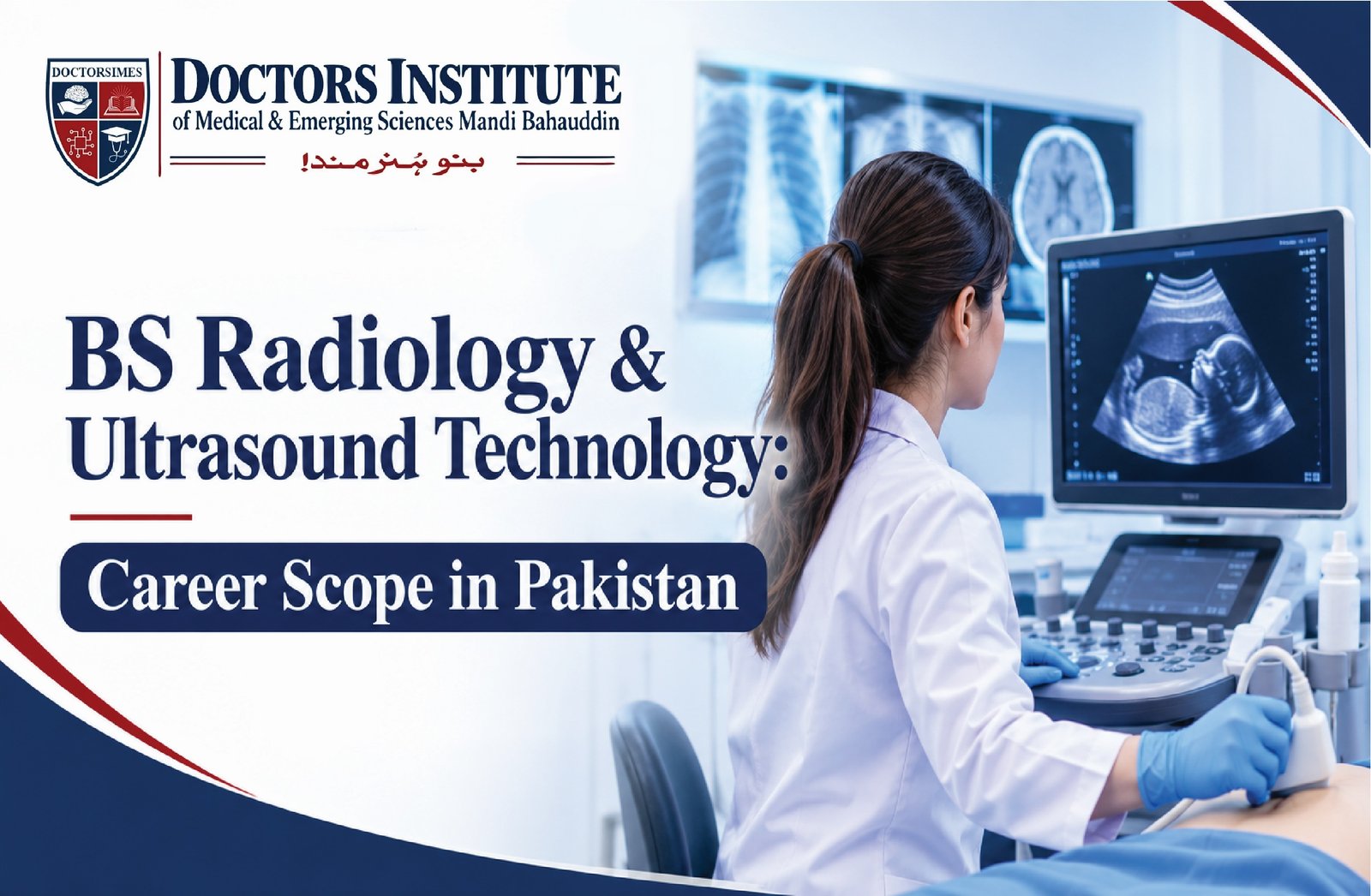
A patient walks into a hospital with chest pain. The doctor orders an X-ray. A technologist positions the patient, captures the image, and sends it for review. Within minutes, the doctor sees what no physical exam could show.
That technologist holds a quiet but powerful role. Every major diagnosis in a modern hospital passes through imaging at some point. Someone has to run the machines, protect the patient, and produce clear results.
This guide explains the career scope of BS Radiology and Ultrasound Technology in Pakistan. It covers what you study, which jobs you can take, how your career can grow, and what to check before you enrol.
Why Medical Imaging Keeps Growing
Doctors once relied mostly on symptoms and touch. Today they rely on scans. Ultrasound checks a pregnancy. CT finds a bleed in the brain. MRI shows a torn ligament. X-ray confirms a fracture in seconds.
Pakistan's hospitals reflect this shift. Even small private clinics now install ultrasound machines. District hospitals add digital X-ray units. Large diagnostic centres run CT and MRI around the clock.
More machines need more trained operators. A scanner without a skilled technologist is an expensive piece of furniture. This gap between equipment and trained staff creates steady demand for radiology graduates.
Population trends push the same direction. People live longer. Chronic illness rises. Pregnancy care expands. Each of these trends increases the number of scans ordered every day.
The World Health Organization treats diagnostic imaging as a core part of health systems. You can read its guidance on the WHO website.
What the Degree Covers
BS (Hons) Radiology and Ultrasound Technology takes four years. Students begin with the basics of the human body. They study anatomy, physiology, and medical terminology. Later semesters move into physics, imaging equipment, and patient care.
The program builds three layers of skill.
Science foundation. You learn how the body works. You also learn how radiation interacts with tissue. This knowledge explains why each scan looks the way it does.
Technical skill. You practice positioning, exposure settings, and image quality checks. You operate real machines under supervision. Ultrasound training adds probe handling, which takes patience and a steady hand.
Professional practice. You learn radiation safety, infection control, and patient communication. A frightened patient needs a calm technologist. A pregnant patient needs a careful one.
The degree from Doctors Institute of Medical & Emerging Sciences has HEC recognition and GCUF affiliation. You can confirm recognition on the HEC website.
Career Paths After Graduation
Radiology offers more than one job title. Each path suits a different temperament.
Radiographer (X-Ray Technologist)
Radiographers produce the images that doctors read. They position patients, select exposure levels, and review the results. Emergency rooms, orthopedic wards, and chest clinics rely on them daily.
This role often serves as the entry point. It builds speed and confidence. Many senior imaging professionals started here.
Ultrasound Technologist (Sonographer)
Sonographers use sound waves to create live images. They scan the abdomen, heart, pelvis, thyroid, and unborn babies. The work needs strong hand-eye coordination.
Demand for this role stays high in Pakistan. Obstetric scans alone keep sonographers busy in cities and small towns. Many graduates choose this path because patients seek the service everywhere.
CT Technologist
CT scanners combine many X-ray images into detailed cross-sections. Technologists prepare the patient, inject contrast when trained to do so, and run the scan. Trauma centres and cancer hospitals depend on this skill.
Most graduates reach CT after gaining some experience. Extra hands-on training helps.
MRI Technologist
MRI uses strong magnets instead of radiation. The work needs careful safety screening. A single metal object near the magnet can cause serious harm. Technologists check every patient and every accessory.
MRI roles usually pay well. They also demand focus and calm judgment.
Specialised and Advanced Roles
With experience and short courses, graduates can move into mammography, bone density scanning, or cardiac imaging. Hospitals with a cath lab also hire imaging specialists. Each niche narrows your work but raises your value.
Where Graduates Work
Your degree opens doors in several settings.
Government hospitals. Public hospitals hire technologists through formal recruitment. These jobs offer stability and a clear pay scale.
Private hospitals. Private groups often move faster on hiring. They also expand their imaging departments often.
Diagnostic centres. Standalone imaging labs depend heavily on radiology staff. Some run extended hours, so shift flexibility helps.
Maternity and women's clinics. Sonographers find strong demand here.
Your own clinic. Experienced sonographers sometimes open a small scan clinic. This route needs capital, a reliable referral base, and compliance with local health rules.
Teaching. Graduates with further study can join colleges as lecturers. Allied health institutes need qualified instructors.
Overseas. Imaging professionals work in many countries. Each country sets its own licensing rules. Check those rules before you plan a move abroad.
Skills That Make You Employable
A degree gets you an interview. Skills get you the job. Employers look for several things.
Technical accuracy comes first. Poor positioning wastes time and repeats radiation exposure. Good technologists get the image right the first time.
Radiation safety awareness matters just as much. Facilities that use X-ray equipment must follow regulatory standards. In Pakistan, the Pakistan Nuclear Regulatory Authority oversees radiation safety. Learn more on the PNRA. The International Atomic Energy Agency also publishes widely used protection guidance on the IAEA website.
Communication earns trust. Patients ask questions during scans. A clear, kind answer reduces fear. Doctors also value technologists who report observations without delay.
Technology comfort helps you grow. Imaging software changes quickly. Digital systems, image storage, and reporting tools now sit at the centre of every department.
Finally, stamina counts. Technologists stand for long hours. They lift, position, and reassure patients. Fitness and patience both help.
Growth and Further Study
A BS degree does not close the learning path. It opens it.
You can pursue an MS or MPhil in a related field. Higher qualifications lead to lecturer and supervisor roles. Some graduates move into hospital management or health informatics.
Short courses add specific skills. Advanced ultrasound, CT protocols, and MRI safety courses help you move into higher-paying roles. Employers notice those certificates.
Professional experience matters as much as paper. A technologist with five strong years often outranks a newcomer with extra credentials. Build both.
Training at Doctors Institute, Mandi Bahauddin
Local training removes many barriers. You study near your family. You avoid hostel costs. You learn in the district you may serve later.
Doctors Institute of Medical & Emerging Sciences offers the BS Radiology and Ultrasound Technology program in Mandi Bahauddin. Dr. Mian Muhammad Saeed, PhD, serves as Director and Principal. The institute follows a simple message: change your thinking, change your education, and become skilled.
The practical side stands out. Students gain exposure at Alvi Hospital, which has served the district for over 30 years. They also train through Makhdoom Diagnostic Centre, the largest diagnostic network in Mandi Bahauddin. The wider network includes more than 19 affiliated hospitals and centres.
More than 26 consultants guide the teaching. Working clinicians explain why a scan looks a certain way. That context turns theory into judgment.
The campus offers a medical library with over 2,775 books. Reading lounges and internet access support quiet study. See the full list on the Facilities page. Students can also use the E-Library for digital material.
Cost worries many families. The institute offers more than 100 scholarships. Ask the admissions team which award fits your result.
Students who prefer an earlier start can look at the two-year FSc Radiology and Imaging Technology program. The institute also lists a Radiology Technician diploma. Read the full course list on the Programs page. Learn more about the institute on the About Us page.
Is This Degree Right for You?
Honest self-checks save years. Ask yourself a few questions.
Do you enjoy technology? Imaging machines reward curious people. Do you stay calm under pressure? Emergency scans leave no room for panic. Can you work with anxious patients? Kindness matters as much as skill.
Consider the downsides too. Shift work is common. Protective lead aprons feel heavy. Some departments run busy from morning to night.
If those points feel manageable, the field offers real stability. If you prefer desk work or minimal patient contact, a different allied health path may suit you better.
Compare options before you decide. The institute also offers medical lab technology, operation theatre technology, and physiotherapy. Each leads to a different daily routine.
How to Apply
The process takes five steps.
1. Review the program requirements.
2. Gather your result cards, CNIC or B-Form, and photographs.
3. Open the Admission page and select Apply Now.
4. Submit your form.
5. Ask about scholarships before you confirm your seat.
Eligibility can change, so confirm the latest rules with the admissions office. Use the Contact page to reach the team. The campus sits at Alvi Hospital, near the Traffic Police Office, in Mandi Bahauddin.
Frequently Asked Questions
Is there any scope of BS radiology in Pakistan?
It has a steady and growing demand in Pakistan's private healthcare sector, though government sector openings remain limited.
Can I work as a sonographer after this degree?
Yes. Ultrasound forms part of the program. Many graduates choose sonography as their main path.
Do I need extra training for CT or MRI?
Most employers expect on-the-job training or short courses. Your degree provides the base.
Is a BS radiologist a doctor?
Bachelor of Science (B.S.) graduate in radiology or radiography is not a medical doctor.
Where can I read related guides?
Browse the News section for more allied health articles.
Final Thoughts
Medical imaging sits at the centre of modern healthcare. Every year, hospitals add scanners. Every scanner needs a trained professional. That simple fact explains the strong career scope of BS Radiology and Ultrasound Technology in Pakistan.
The degree offers varied roles, steady demand, and room to specialise. Students in Mandi Bahauddin can now train for it close to home, inside real hospitals and diagnostic labs.
Decide whether imaging fits your strengths. Check recognition, visit the campus, and speak with faculty. Then apply. Your career behind the scanner can start in your own district.